

How to Improve Bone Density After 50: A Practical Guide
Table of Contents
- Can You Improve Bone Density After 50? What the Evidence Shows
- Bone Density Test After 50: When to Get One and How to Read It
- Exercises to Increase Bone Density: Weight-Bearing and Strength Training
- Calcium and Vitamin D for Bone Health: How Much You Need
- Foods for Strong Bones After 50: A Food-First Approach
- Habits That Speed Bone Loss: Smoking, Alcohol, and More
- Fall Prevention and When Lifestyle Changes Are Not Enough
- Frequently Asked Questions
Last Updated: October 16, 2026
Can You Improve Bone Density After 50? What the Evidence Shows
Yes, you can improve bone density after 50, though the amount of change depends on where you start.
Bone is living tissue. It breaks down and rebuilds all day, every day.
This guide from BDWpdfguides covers the practical steps that matter most, in plain terms.
Three things decide how well this works:
- Load. Bone responds to the weight and pull placed on it.
- Fuel. Calcium, vitamin D, and protein give your body the raw material.
- Consistency. A little every week beats one big effort.
Miss any one of these and progress stalls. Get all three right and you give your bones a real chance to hold their strength.
Bone Density Test After 50: When to Get One and How to Read It
A bone density test after 50 measures how much mineral is packed into your bones. The most common scan is called DEXA, a quick, low-dose X-ray that takes about 10 minutes.
The result comes back as a T-score. That number tells you how your bone mass compares to a healthy young adult:
- -1.0 or higher: normal
- -1.1 to -2.5: low bone mass, sometimes called osteopenia
- -2.5 or lower: osteoporosis
Ask your doctor when to test. Many guidelines suggest screening around menopause or age 65, sooner if you have risk factors.
Bone Health & Osteoporosis Foundation screening guidance
A single scan gives you a starting point. A repeat scan years later shows whether your plan is working.
Exercises to Increase Bone Density: Weight-Bearing and Strength Training
Exercises to increase bone density fall into two groups: weight-bearing activity and strength training. Bone builds where it feels load, so both types matter. Aim for a mix across the week.
Weight-Bearing Activities You Can Start Today
Weight-bearing means your feet and legs carry your body against gravity. These are the accessible options:
- Walking. Easy to start and easy to keep up. Aim for 30 minutes most days.
- Stair climbing. Adds load through the hips and legs. Use a rail for balance.
- Jogging. More impact, so build up slowly if you're new to it.
- Hiking. Uneven ground works your balance too.
- Tennis and dancing. Quick direction changes load the bones.
Swimming and cycling are great for your heart, but they're not weight-bearing. They won't do much for bone mass on their own, so pair them with the list above.
Strength Training and Resistance Bands
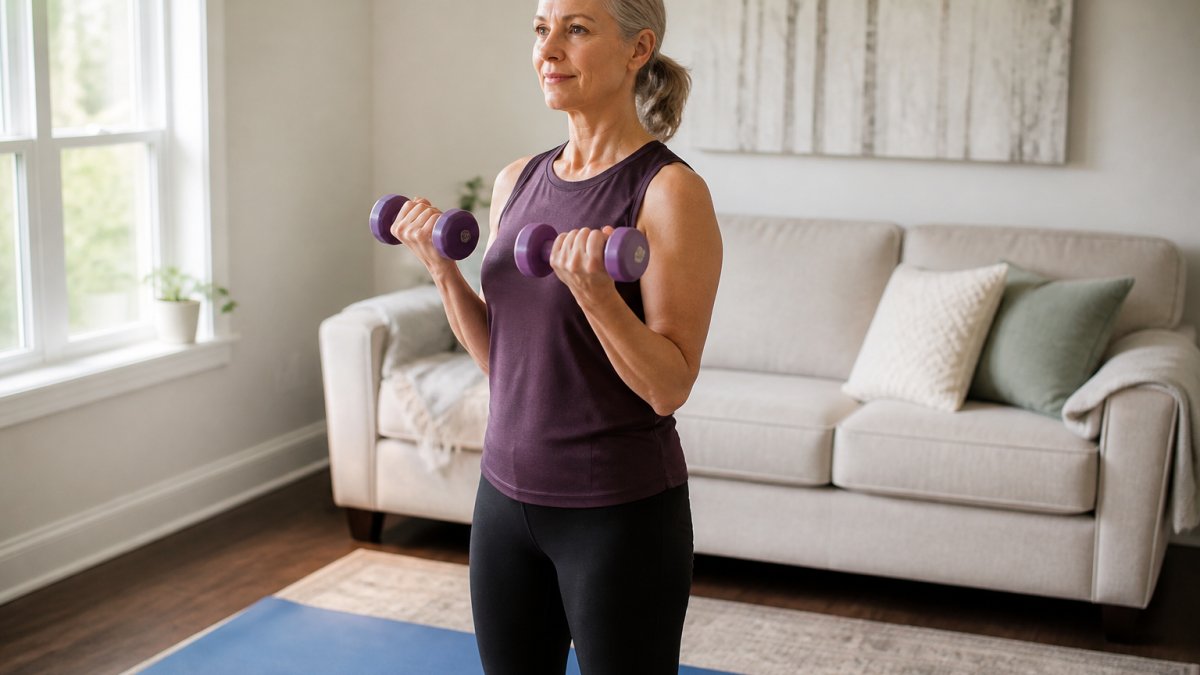
Strength training pulls on bone and tells it to rebuild. You don't need a gym. Body weight, light dumbbells, and resistance bands all work.
Target the big muscles: legs, hips, back, and arms. Two or three sessions a week is a solid target. Progress by adding a little weight or a few reps over time.
If you're new to lifting, start light and focus on form first. A physical therapist or trainer can check your technique.
Safety First: Modifications for Osteoporosis, Prior Fractures, and Pain
This is the part most guides skip. If you have osteoporosis, a prior fragility fracture, significant back pain, or mobility limits, the same exercises can still work, but they need to be modified.
Movements that often need professional modification:
- Spinal flexion under load, crunches, sit-ups, toe touches with a rounded back, and some yoga poses. These can compress the front of the vertebrae.
- Spinal rotation under load, heavy Russian twists, golf swings, and some cable woodchops. Rotation plus load is a common fracture mechanism.
- High-impact jumping, box jumps, burpees, and plyometrics. Impact can be fine for some, but not for a spine or hip with known fragility.
- Heavy overhead pressing, can stress the thoracic spine if form breaks down.
Safer swaps that still build bone:
- Instead of crunches, try dead bugs or bird dogs to train the core without flexing the spine.
- Instead of toe touches, try a hip hinge with a neutral back.
- Instead of box jumps, try step-ups onto a low, stable platform.
- Instead of heavy overhead presses, try band pull-aparts and rows to load the upper back safely.
When to get professional guidance:
- You've had a fragility fracture (a break from a fall at standing height or lower).
- Your T-score is -2.5 or lower.
- You have constant back pain, a loss of height, or a stooped posture.
- You're unsure whether a movement is safe.
A physical therapist with bone health training, or a trainer who works with older adults, can screen your routine and adjust it. This isn't about avoiding exercise, it's about doing the right version of it.
Calcium and Vitamin D for Bone Health: How Much You Need
Calcium and vitamin D for bone health work as a team. Calcium is the mineral your bones are built from. Vitamin D helps your body absorb it.
Daily calcium targets for adults over 50:
- Women over 50: about 1,200 milligrams
- Men over 50: about 1,000 milligrams
Vitamin D targets are usually 800 to 1,000 international units a day, though your doctor may suggest more based on your blood level. Mayo Clinic guidance on calcium and vitamin D
Food should come first. Supplements fill the gaps, not replace meals. If you take a calcium supplement, split the dose across the day.
Foods for Strong Bones After 50: A Food-First Approach
Foods for strong bones after 50 are easier to work in than most people think. You don't need a special diet. You need to hit your calcium and protein targets most days, and know when food alone isn't enough.
Calcium-Rich Foods (with realistic portions)
- Dairy: 1 cup of milk or yogurt ≈ 300 mg calcium; 1 oz hard cheese ≈ 200 mg.
- Leafy greens: 1 cup cooked kale ≈ 180 mg; 1 cup cooked collards ≈ 260 mg; 1 cup raw bok choy ≈ 75 mg.
- Canned fish with bones: 3 oz sardines ≈ 325 mg; 3 oz canned salmon with bones ≈ 180 mg.
- Fortified foods: 1 cup fortified plant milk ≈ 300 mg; check labels, amounts vary widely.
- Tofu made with calcium sulfate: ½ cup ≈ 250-350 mg, depending on brand.
Protein Matters Too
Bone is part rough protein framework, and many adults over 50 don't eat enough. A common target is about 1.0-1.2 grams of protein per kilogram of body weight per day for healthy older adults, though your doctor may adjust this if you have kidney disease. For a 150-pound (68 kg) person, that's roughly 68-82 grams a day.
Easy ways to hit it:
- 1 cup Greek yogurt ≈ 20 g protein
- 3 oz chicken or fish ≈ 21-25 g
- 1 cup cooked lentils ≈ 18 g
- 1 egg ≈ 6 g
- 1 cup milk ≈ 8 g
Aim for a protein source at each meal, not just dinner.
A Simple Bone-Friendly Day
| Meal | Bone-friendly choice | Why it helps |
|---|---|---|
| Breakfast | Yogurt with fortified cereal | Calcium plus vitamin D |
| Lunch | Sardines on toast | Calcium and protein |
| Snack | A glass of milk | Easy calcium |
| Dinner | Salmon with kale | Protein and calcium |
When Food Isn't Enough: Supplement Decisions
Food should come first. Supplements fill the gaps, not replace meals. But after 50, gaps are common, especially for vitamin D, which is hard to get from food alone.
How to decide:
- Track your calcium for 3 days. Use a free app or a notebook. If you're consistently below your target (about 1,200 mg for women over 50, about 1,000 mg for men over 50), a supplement may help.
- Ask for a vitamin D blood test. Your doctor can check your level and recommend a dose. Many adults need 800-1,000 IU daily, but some need more, and more isn't always better.
- Split calcium doses. Your body absorbs smaller amounts better. Take no more than 500-600 mg at one time.
- Choose the right form. Calcium citrate is easier to absorb for people with low stomach acid; calcium carbonate is cheaper and works with food.
- Talk to your clinician before starting. Supplements can interact with medications (including some antibiotics, thyroid meds, and blood thinners) and, in high doses, may carry risks.
Mayo Clinic guidance on calcium and vitamin D
Habits That Speed Bone Loss: Smoking, Alcohol, and More
Smoking and heavy drinking both speed bone loss. Quitting smoking is one of the single best things you can do for your bones, and it helps at any age. Smoking cessation lowers your fracture risk over time.
Alcohol matters too. Keep intake low. Heavy drinking interferes with calcium absorption and raises fall risk.
Other habits that quietly work against you:
- Skipping meals. Low calcium and protein intake adds up.
- Sitting all day. Bones need daily load, not weekend-only effort.
- Crash dieting. Very low body weight weakens bone.
- Ignoring balance. Poor balance means more falls, and falls mean fractures.
International Osteoporosis Foundation on lifestyle and bone health
Fall Prevention and When Lifestyle Changes Are Not Enough
Fall prevention protects the bone you have. A fracture from a fall is often the event that changes everything, so cutting fall risk is as important as building bone.
Practical steps:
- Clear loose rugs and clutter from walkways
- Use good lighting, especially at night
- Install grab bars in the bathroom
- Wear shoes with solid grip
- Practice balance work, like standing on one foot near a counter
Sometimes lifestyle changes are not enough. If your T-score shows osteoporosis, or you've already had a fragility fracture, your doctor may recommend medication alongside diet and exercise. That's not a failure on your part.
National Institute on Aging on bone health and falls
Bone loss after 50 is real, but you have more control than you might think. At BDWpdfguides, we've built a short, practical guide called Bone-Strong After 50 that turns all of this into a plan you can start today.
Frequently Asked Questions
Can you increase bone density after 50?
Yes, you can improve bone density after 50. Weight-bearing exercise, resistance training, adequate calcium and vitamin D, and avoiding smoking can help maintain or even build bone mass. Progress takes months, so consistency matters more than intensity.
What exercises can I do at home to improve bone density after 50?
At home, try weight-bearing moves like marching in place, stair climbing, and dancing. For strength, use resistance bands or light dumbbells for squats, lunges, and overhead presses. Aim for at least 30 minutes of weight-bearing activity most days and strength training two to three times a week. Always warm up and modify if you have joint pain.
How much calcium and vitamin D do adults over 50 need for bone health?
Adults over 50 need about 1,200 mg of calcium daily and 800 to 1,000 IU of vitamin D. Food sources like dairy, leafy greens, and fortified plant milks are best. If you can't get enough from diet, a supplement can help. Vitamin D aids calcium absorption, so getting both is key. Your doctor can check your levels and recommend a dose.
When should I get a bone density test after 50?
Women should get a bone density test at age 65, or earlier if they have risk factors like menopause, smoking, or a family history of fractures. Men should ask their doctor about testing at 70, or earlier with risk factors. A DEXA scan is painless and takes about 15 minutes. Results come as a T-score: -1 and above is normal, -1 to -2.5 is osteopenia, and -2.5 or lower is osteoporosis.